Docs / Mergebase
Getting Started
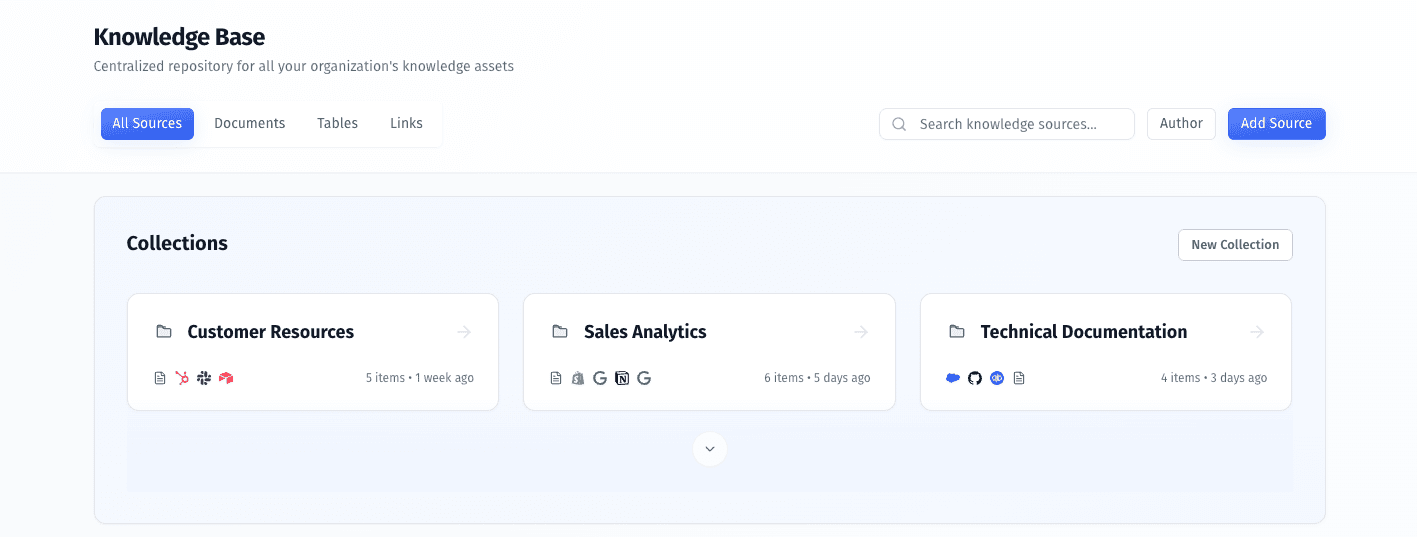
Internal search with context — trained on your data.
The MergePoint Knowledge Base transforms your organization's documents, spreadsheets, and reference materials into a searchable, structured knowledge layer. This content becomes the foundation for everything your system touches: automations, dashboards, AI agents, and internal tools.
It's not just storage. It's what your system refers to when it needs to reason, respond, or route, just like a person would reference a manual, guide, or historical record before making a decision.
What Is Knowledge in MergePoint?
In MergePoint, knowledge refers to any internal material that supports decisions, responses, or calculations. This includes:
Standard operating procedures
Internal policies and thresholds
Reference tables or structured data
Example-based content (like email drafts or templates)
Connected data from external systems like CRMs, ERPs, Slack, Google Drive, Notion, or SharePoint
Once added to a Collection, this knowledge can be searched, queried, or embedded into any workflow, dashboard, or agent interaction.
Where It's Used
Knowledge in MergePoint isn't isolated. It becomes active infrastructure used throughout your system:
AI Agents Agents reference relevant knowledge when generating responses, answering questions, or summarizing content.
Workflows Human-in-the-loop and automated steps can reference knowledge for decisions, validation, routing, or fallback logic.
Dashboards and Reporting Dashboards can reference structured knowledge for normalization, risk tagging, dynamic rules, or audit traceability.
Retrieval Methods
MergePoint supports multiple ways of retrieving relevant knowledge depending on the task:
Semantic Search Finds information based on meaning, not just keywords. This helps AI agents and workflows retrieve accurate answers even when terms differ from what's in the document.
To improve retrieval:
Use clear, consistent phrasing
Group related information together logically
Include synonyms or alternative terms when useful
Hybrid Search Combines semantic and keyword-based results. Best when working with structured identifiers like codes, labels, or role titles.
Filtered Retrieval Apply filters based on metadata, tags, or file type. Example uses:
Only retrieve from a specific Collection
Filter by tags like "active," "final," or "Q1"
Limit access to human agents, not automated steps
These modes ensure your knowledge is relevant, accurate, and scoped correctly.
Types of Knowledge and Their Uses
Knowledge TypeDescriptionBest Used ForReference DocumentsPolicies, procedures, guides, historical reportsDecision logic, agent grounding, SOP enforcementStructured TablesSpreadsheets, pricing tables, thresholds, classification schemasApprovals, validations, dashboard referencesExample-Based ContentDraft emails, formatted case studies, annotated templatesShaping tone, structure, and layout in AI responsesSnippet KnowledgeShort inserts like tone cues, signature blocks, or checklist itemsFormatting, writing style, tone consistencyLive Data SourcesReal-time data from CRMs, databases, connected appsKeeping knowledge current with automated syncSetup Guide
Step 1: Add a Data Source Choose from three source types:
Documents: Upload files (PDFs, spreadsheets, text docs)
Database Tables: Connect external systems (CRMs, ERPs) via API
Connected Apps: Link platforms like Slack, Google Drive, Notion
Step 2: Create or Select a Collection Organize your sources by theme, workflow, or audience. Collections help scope and manage retrieval.
Step 3: Configure Tags and Fields (Optional) Apply filters, tag content, and highlight important sections to improve AI accuracy and control access.
Step 4: Start Using It Across the System Once added, knowledge can be:
Referenced in workflows and logic
Queried by AI agents
Pulled into dashboard logic or visualizations
No additional formatting required.
Why It Matters
Centralized logic Store rules, references, and business logic in one maintainable place
System-wide usage Power AI, workflows, and dashboards with the same trusted content
Version-aware and query-ready Update once—have it used consistently across teams and tools
Operational clarity and consistency Ensure everyone (and everything) works from the same source of truth
Was this helpful?